A friendship fixture forgotten for more than 40 years returned for round two and finished 140-all after 2352 bowls.
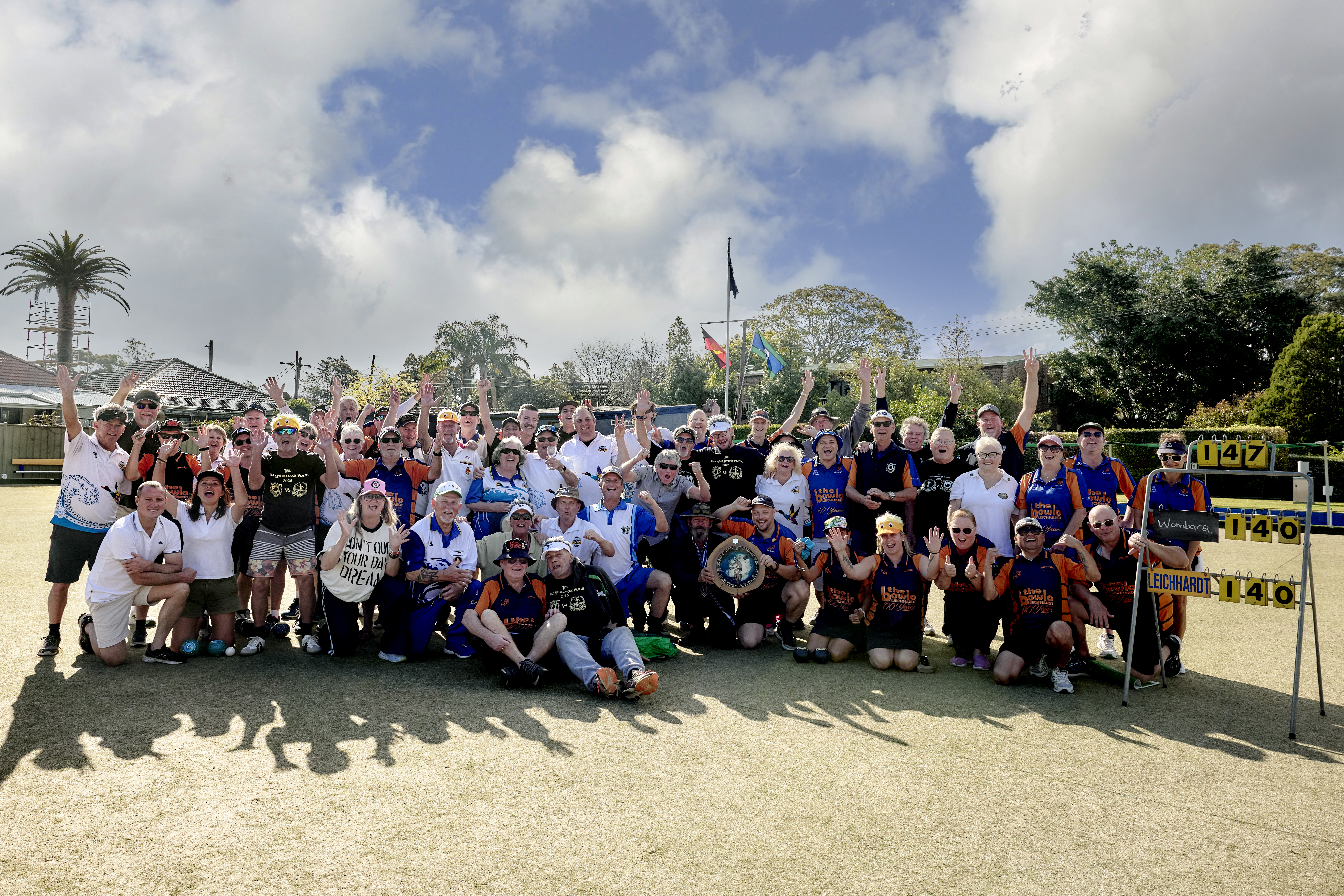
Fifty-six bowlers. Seven rinks. One hundred and forty-seven ends. Two thousand, three hundred and fifty-two bowls — and after every last one of them, not a single shot separated the two clubs.
Leichhardt 140. Wombarra 140.
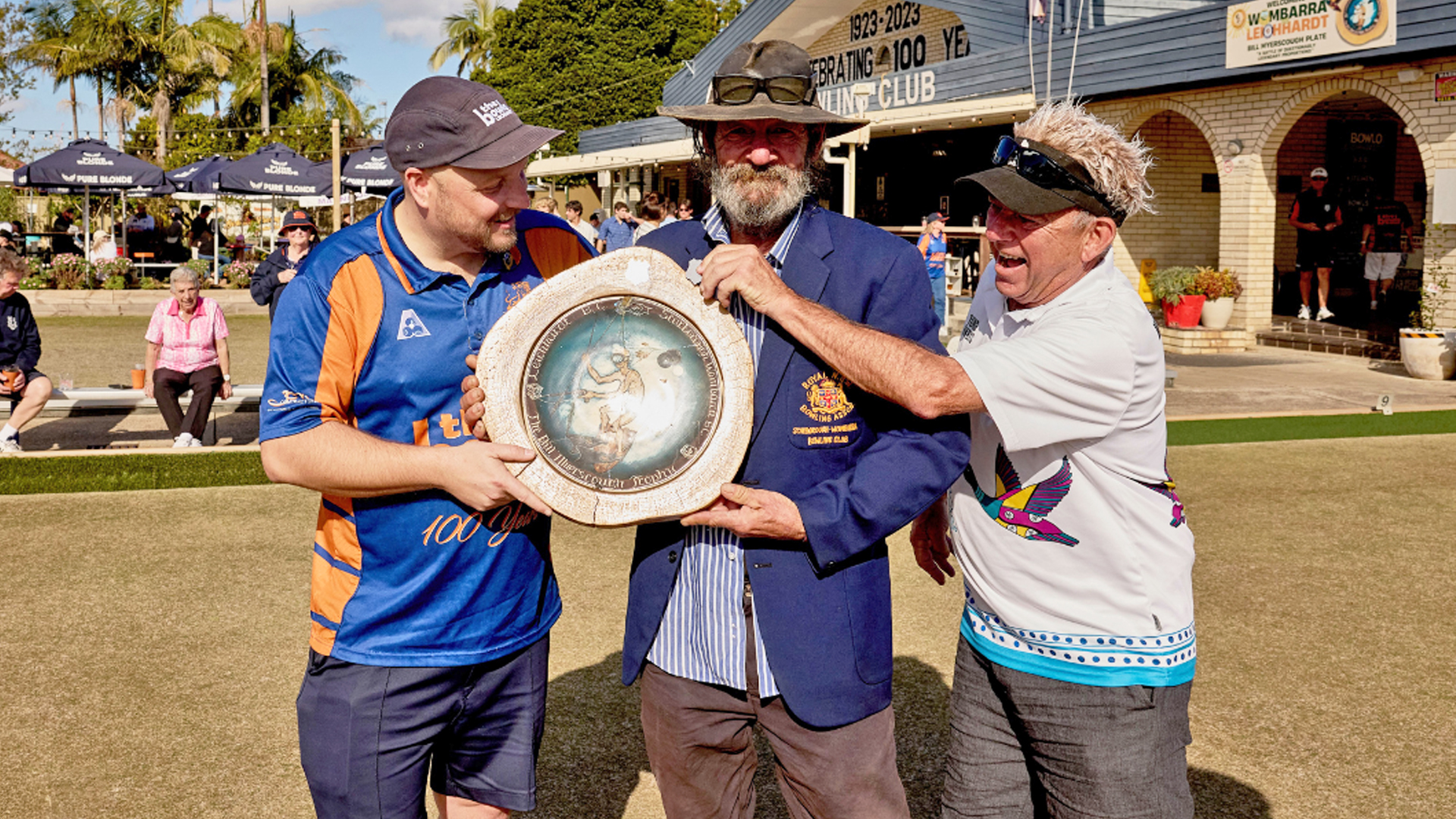
The Bill Myerscough Plate is a friendship competition between Leichhardt Bowlo in Sydney’s Inner West and Wombarra Bowlo on the Illawarra coast. For decades the Plate hung almost forgotten. Now it’s back, and its second outing produced a finish bowlers will be reminiscing about at the bar for years to come.
On Saturday, 29 August 2026, it came down to the last bowl of the last end on the last rink. The rules were clear on what happened to the Plate in a draw. They never mentioned what to do with the keg.
But first, how these two clubs came to be playing each other at all.
Bill “Hipdrop” Myerscough
Enter one schooner and Bowlo enthusiast, yours truly. I spotted an old hand-painted plate sitting idle among the Wombarra silverware, carrying the names of Scarborough-Wombarra Bowling Club and Leichhardt Bowling Club, and started asking questions.
Nobody could say when it was last played for. A few more questions, a few phone calls between the clubs, and the fixture was back on the bowls calendar after more than 40 years.
The bloke on the trophy was Bill “Hipdrop” Myerscough, a charismatic character of the 1950s whose name still sits in gold on the Wombarra honour boards. He is remembered for his wooden bowls with so much bias that bowlers two rinks over would have to stop and let them pass.
Bill was also a storyteller. He’d tell people he could spear nine garfish in one shot. His daughter, 90 years old when Wombarra tracked her down for last year’s revival, pointed out that he had never set foot in the ocean.
Which gives you a fair idea of the kind of fella Bill was.
Somewhere among the myth and legend was a friendship between Wombarra and Leichhardt bowlers strong enough to put both clubs on a trophy in his name.
Last year, 28 Leichhardt bowlers went south with a keg and probably a bit too much confidence. Wombarra restored the Plate, fed and watered us and beat us by eight shots.
We’d had twelve months to think about those eight shots.
Bus due at ten
By 8.30am the first Leichhardt bowlers were arriving with jobs to do.
There was a list, several people working off it, several others who had never seen it and just enough controlled chaos to make the whole thing work. The barbecue was fired up, tables shifted, cards sorted and cakes arrived, then more cakes.
The Wombarra bus was due at ten, so it seemed sensible to open the bar beforehand and make sure everything was in working order.
Ahead of the bus, Sean Izzard of Wombarra arrived separately with the Bill Myerscough Plate and a keg of Resch’s, presumably for the same reason the US president and vice-president never fly on the same plane.
By the time the bus pulled in, breakfast was on the barbecue and the Leichhardt Lynx bowlers had laid out enough home-baked goods to put an end to any plans for a light start.
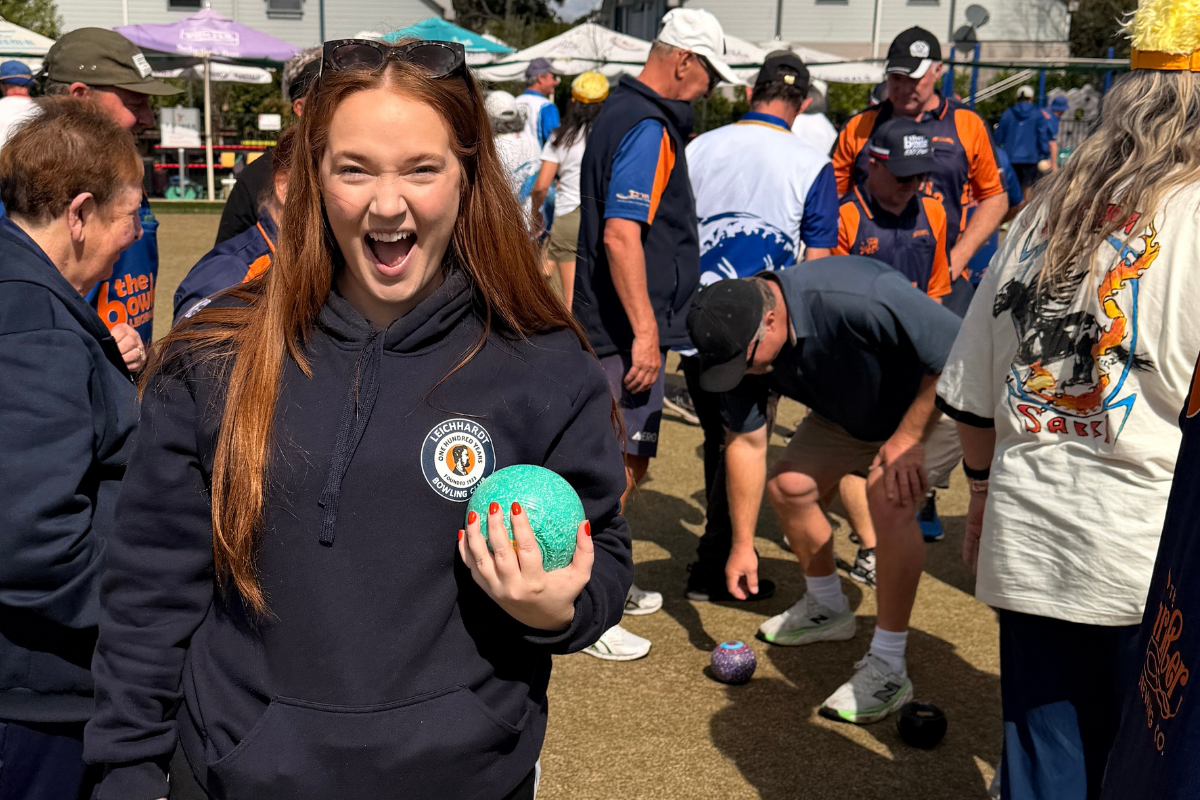
The clubs swapped Bill Myerscough bowls cloths and beer cosies, the history got a quick retelling, the cards were called and everybody headed out for a ‘bowls spider’ — everyone bowling at the one jack, closest wins.
It is not a precision event.
The winner was Helen Eade, a first-year Leichhardt bowler and dark horse at the pointy end of the Leichhardt Lynx Major Singles — and my partner.
The relationship between the winner and the event organiser was duly noted and will be reviewed at great length by the Bowlo Integrity Committee.
It looked like pennants but it felt like a party
Fifty-six bowlers across all seven rinks is what our green looks like on a serious Saturday of pennants.
The sound was different — banter between ends, a fair bit of lip across the rinks and a healthy rivalry of questionably legendary proportions.
The bowls mattered. The Plate mattered. None of it mattered enough to get in the way of a bloody good time.
Each rink played its own game, with every score feeding into one club total. As they finished, the numbers went up on the big board and the margin refused to grow.
Then there was one rink left. Rink 5.
Everyone drifted to the sideline and the arithmetic was done out loud. Wombarra led by two shots.
Leichhardt legend Marie Senico had the final bowl and things were looking grim.
Marie saved her best for last, turning two down into two up.
All square.
Leichhardt 140. Wombarra 140.
For a second nobody said much. Then came the obvious verdict — neither side had won and hardly a soul on the green felt like they’d lost.
Bowls, as they say, was the winner on the day.
The Plate went south. The Resch’s didn’t.
The conditions of play had covered the ridiculously unlikely event of a draw — the holder keeps the Plate.
Writing that clause had seemed like a laugh at the time. Seven rink scores landing on an exact tie was the sort of thing you include because somebody will inevitably ask, not because you expect to use it.
Then the unlikely thing happened, and rules are rules.
Wombarra had won last year, so the Plate stayed with Wombarra.
The keg was another matter.
Under the new and entirely sensible tradition of the competition, the visiting club brings a keg — because you never show up to a party empty-handed — and the winner keeps it.
The law was clear on the Plate and completely silent on the beer, leaving the Resch’s in a brief administrative grey area.
It did not require a tribunal.
The keg was tapped, both clubs drank it and that was that.
Old trophies, new mates
Small clubs don’t have endless money, staff or spare time. What they do have are people prepared to turn up early, stay late, cook brekkie, bake cakes, drive a keg up the highway, or ask if anyone’s keen for a roll-up and a beer.
There must be old cups, forgotten shields and future mates sitting in clubhouses all over the country, waiting for someone to ask what the story is.
This one came back because a few bowlers reckoned it would make for a good day out, with a bit of club pride on the line and a 100 per cent chance of a beer and a yarn.
Wombarra President Pedro summed it up simply: A brilliant day and one both clubs need to keep alive.
Round three is booked for 2027, when Leichhardt heads back down the coast.
The only numbers that stacked up
By Sunday the result still hadn’t sunk in.
During a post-mortem with some of Leichhardt’s walking wounded, increasingly ambitious calculations were offered to explain the likelihood of a 140-all draw.
Several were so far-fetched that, had their maths been correct, the two clubs would still be playing the same game until 2056.
What everyone could agree on was much simpler: It had been a cracking day.
Speaking of cracking
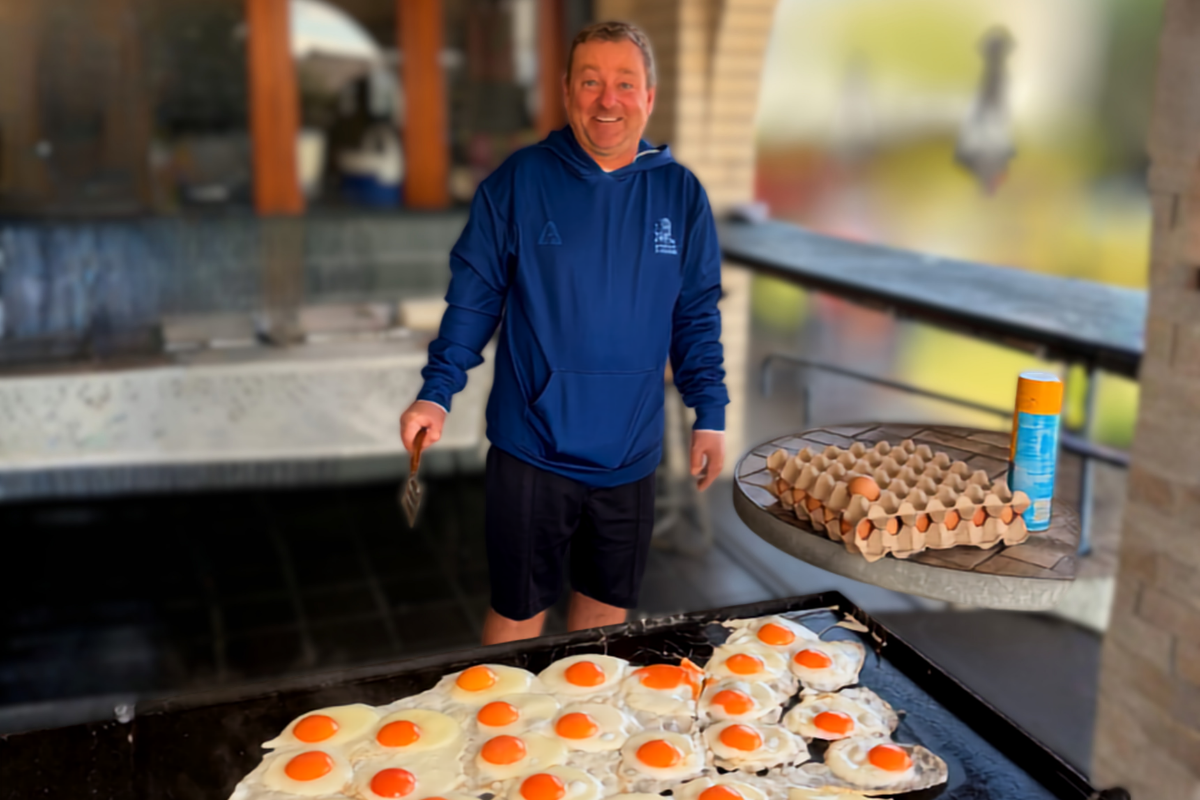
There was one clear statistical winner on Saturday and he had settled his contest before 10am.
Alex Kiethlow, on team breakfast barbecue, was on the eggs. He cracked more than 60 onto that hotplate.
Only three yolks broke.
Hats off to you, Alex.
And so the legend of the Bill Myerscough Plate continues.