Safe Spaces has launched its nationally accredited domestic and family violence (DFV) training to strengthen awareness and response capability across the club industry.
Safe Spaces is helping club staff build the knowledge and practical skills to recognise and respond appropriately to domestic and family violence (DFV), with its first assessment day marking an important milestone in the program’s development.
From awareness to practical skills
Club staff build relationships with members, colleagues and their communities every day. These connections can put them in a position to notice when something is not right — but recognising the signs of DFV and responding appropriately can be challenging without the right training.
Safe Spaces was developed specifically for the club industry to help address this challenge. Learning for Good worked alongside clubs across NSW and ClubsNSW Head of Social Impact Arely Carrion to shape a program around the needs and realities of club workplaces.
The program gives clubs a practical way to introduce staff to DFV awareness before progressing to more advanced learning and nationally recognised training.
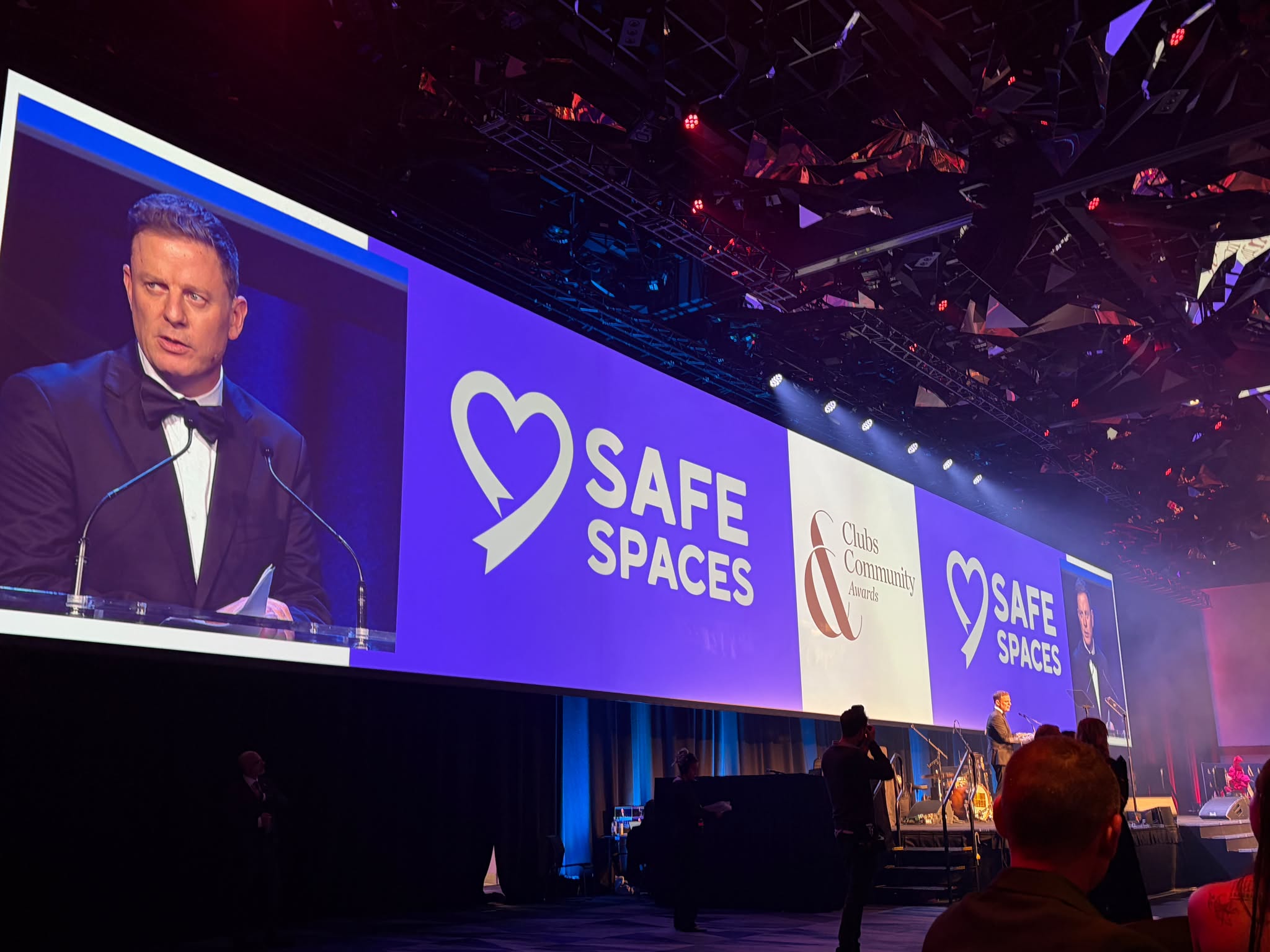
Learning for Good launched the free introductory modules at the Clubs & Community Awards Night in June. Since the launch, 49 clubs have registered for free access to the platform.
Safe Spaces moves into accredited training
Safe Spaces has entered the next stage of its development, with participants undertaking Virtual Classroom training and assessment towards CHCDFV001 recognise and respond appropriately to domestic and family violence, a nationally recognised unit of competency.
Learning for Good has partnered with CMNL Academy, RTO 6871, which will deliver and assess the nationally recognised training. A contracted trainer and assessor will facilitate the Virtual Classroom day and assess participants against the relevant requirements. Those who meet the assessment requirements will receive a Statement of Attainment for the unit.
The accredited pathway builds on the four free introductory modules. It includes three advanced modules, a self-directed learning module and a Virtual Classroom day incorporating further training and assessment.
This structure allows clubs to start with introductory learning before considering the more comprehensive accredited pathway for staff whose roles and responsibilities warrant further training.
Built with the club industry
Safe Spaces has drawn on the experience and input of real clubs throughout its development, from ideas to execution. That industry involvement matters. Training needs to reflect the environments in which club staff work, while helping them understand their role and how to respond appropriately when someone may be experiencing DFV.
Revesby Workers’ Club was heavily involved in this process. Sharyn Buhagiar, Chief People Officer at Revesby Workers’ Club, has supported the program and its relevance to the club industry.
“For any clubs thinking about it, it just makes sense,” says Sharyn.
Safe Spaces reinforces an important principle: staff do not need to become DFV specialists. They need appropriate training to recognise concerns, respond safely, understand their boundaries and connect people with the right support.
Take the next step with Safe Spaces
Clubs can begin with the four introductory modules, which are available free of charge to club staff. Clubs interested in building further capability can also enquire about the accredited pathway.
To learn more, register your interest at www.safespaces.club or contact Learning for Good at hello@learningforgood.org.au.
Safe Spaces aims to help clubs build a culture where staff feel better equipped to respond appropriately and support safer communities.
The presence to care. The power to change.
Safe starts here.