
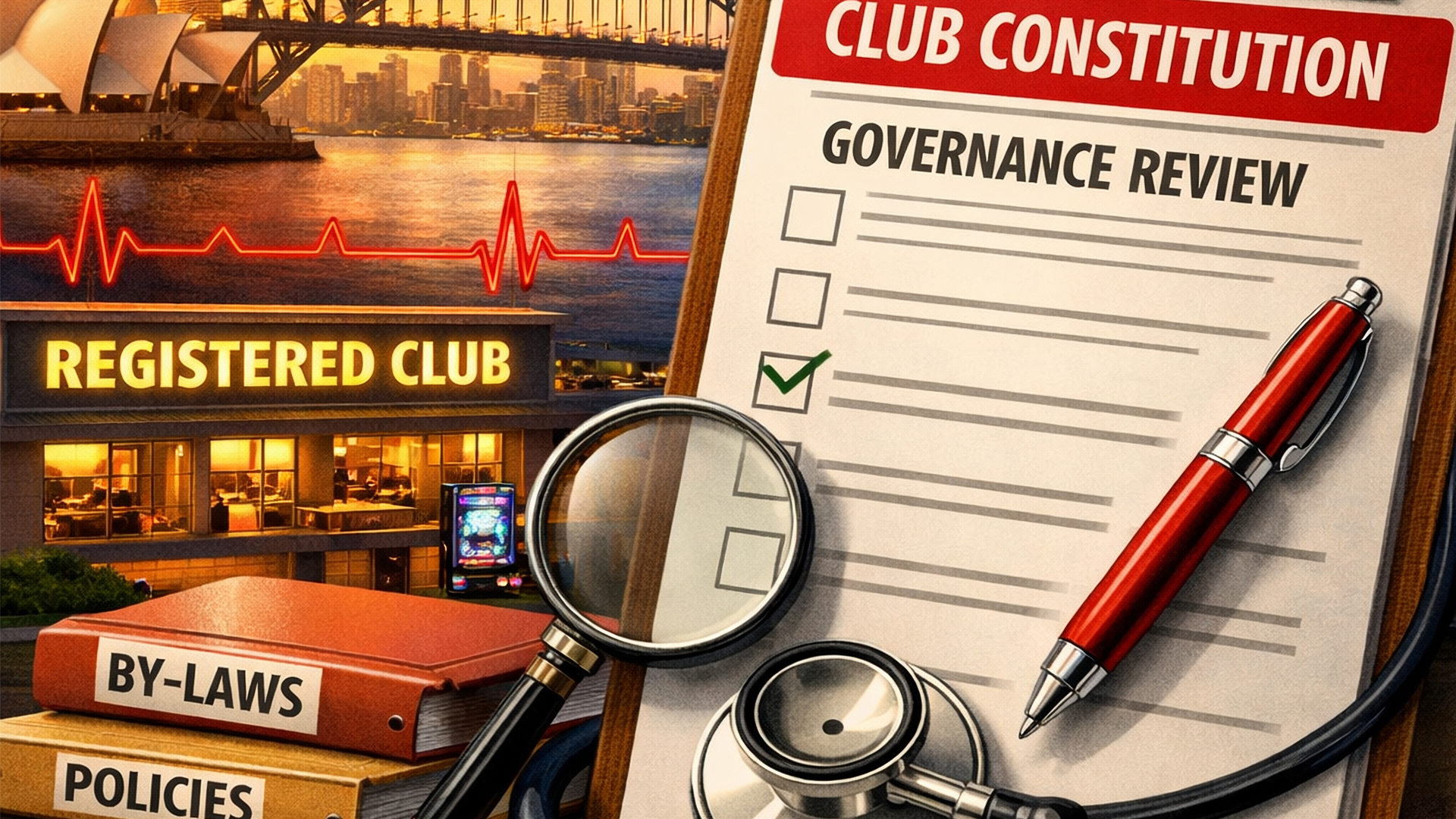
A simple constitution health check can help member clubs reduce governance risk, support procedural fairness and stay up-to-date.
Key Points
- Review constitutions, by-laws and equivalent governing documents at least every five years
- Ensure disciplinary processes and communications align with the club’s governing documents
- Constitutional interpretation issues frequently arise in Code-related matters
- Regular reviews can identify outdated terminology, unclear powers and governance gaps
- Update governing documents to reflect legislative changes and current governance practices
A club’s constitution and by-laws help set the rules for how the club operates, how decisions are made and how members are treated.
They are important governance tools and should continue to reflect how the club operates today. To ensure these documents remain effective and fit for purpose, member clubs are encouraged to undertake a comprehensive review at least every five years.
Regular reviews help ensure governing documents accurately reflect a club’s current operations, governance arrangements and membership structure. They can also identify provisions that are outdated, unclear or inconsistent with current practice.
Matters arising under the Club Governance Code of Practice (the Code) often come back to what a club’s constitution or by-laws say and how they are applied in practice. In many cases, the answer can be found in the club’s constitution or by-laws and the processes they set out. The Code Authority has observed that governance issues often arise where governing documents are unclear, outdated or where clubs inadvertently depart from the processes they contain.
Particular attention should be given to disciplinary matters. Notices, correspondence and disciplinary decisions should align with the terminology, powers and procedures contained in a club’s governing documents. Using language that does not align with the club’s governing documents can create confusion for members and lead to avoidable governance issues.
Common issues identified during governance reviews include:
- uncertainty as to whether a particular disciplinary outcome is authorised by the constitution;
- confusion between suspension, expulsion, termination of membership and other disciplinary measures;
- disciplinary notices or correspondence that do not comply with constitutional requirements;
- ambiguity regarding who has authority to investigate, determine or review disciplinary matters;
- inconsistencies between a club’s constitution, by-laws and established practices;
- uncertainty regarding membership categories and associated rights;
- outdated terminology or references to repealed legislation; and
- unclear appeal, review or disciplinary processes.
A review also provides an opportunity to ensure governing documents continue to reflect current legislative and regulatory requirements. Changes to legislation, governance practices and industry standards can leave provisions outdated or ineffective if they are not periodically updated. Regular reviews help identify obsolete references, superseded concepts and terminology that no longer reflect current obligations or best practice.
Governance Review Checklist
When reviewing your club’s constitution, by-laws or equivalent governing documents, consider whether they:
☐ Clearly reflect the club’s current governance structure and operations.
☐ Accurately define membership categories and the rights attached to each category.
☐ Clearly set out director, board, committee and management powers and responsibilities.
☐ Contain disciplinary powers that are clear, appropriate and fit for purpose.
☐ Properly distinguish between suspension, expulsion, termination of membership and other disciplinary measures.
☐ Provide clear and procedurally fair disciplinary, appeal and review processes.
☐ Identify who has authority to investigate, determine and review disciplinary matters.
☐ Align with the club’s current policies, procedures and established practices.
☐ Use consistent terminology throughout all governing documents.
☐ Contain current references to legislation, regulations and industry requirements.
☐ Remove outdated provisions, repealed legislation and superseded concepts.
☐ Reflect contemporary governance standards and best practice.
☐ Support transparent, consistent and defensible decision-making.
☐ Provide sufficient flexibility to address future operational and governance needs.
A constitution should be a living governance document, not one that sits untouched for decades. By incorporating periodic reviews into the club’s governance calendar, clubs can help ensure their governing documents remain clear, current and effective, while reducing governance risk and supporting sound decision-making.
When was the last time your club reviewed its constitution? If you cannot remember, do not know, or it has been more than five (5) years, consider placing a review of your constitution, by-laws or equivalent governing documents on your Board’s next governance agenda. Consider whether your governing documents reflect how the club operates today, whether disciplinary and governance processes remain fit for purpose and whether recent legislative and regulatory changes have been appropriately incorporated.
A proactive review can help identify issues early, clarify processes and ensure governing documents continue to support the club’s operations and decision-making. Strong governance starts with governing documents that are clear, current and consistently applied.
“A constitution should be a living governance document, not a document that sits untouched for decades.”